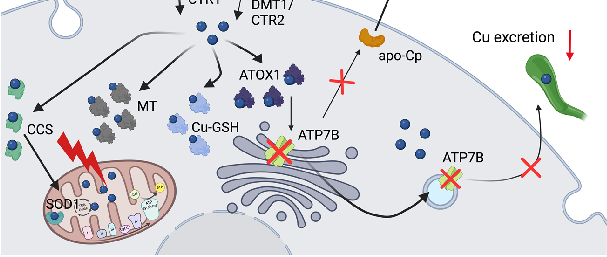
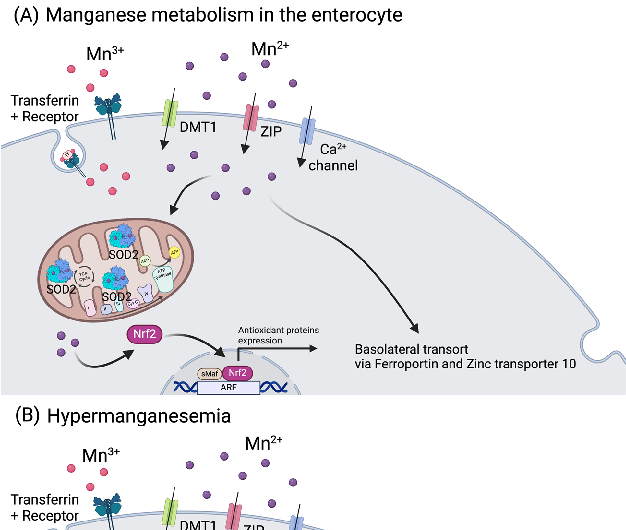
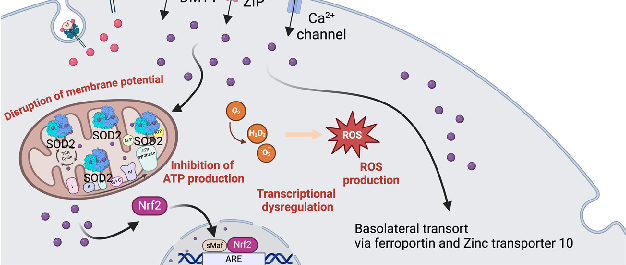
Figure 8
687 × 481px
· 187,2 ك.ب
Source Paper
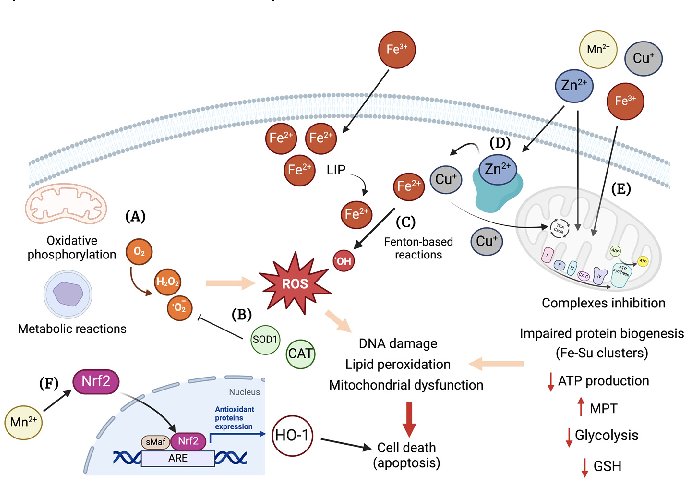
Metabolic Derangement of Essential Transition Metals and Potential Antioxidant Therapies.Cite This Figure
 > Source: Adriana Fontes et al. "Metabolic Derangement of Essential Transition Metals and Potential Antioxidant T." *International journal of molecular sciences*, 2024. PMID: [39063122](https://pubmed.ncbi.nlm.nih.gov/39063122/)
<figure>
  <img src="https://pdfs.citedhealth.com/figures/39063122/177.png" alt="Figure 5. Overview of cellular mechanisms related to toxicity by essential transition metals. (A) Different metabolic pathways in the cell use O2, e.g., oxidative phosphorylation in the mitochondria. The generation of ROS, such as H2O2 and •O−" />
  <figcaption>Figure 8. Figure 5. Overview of cellular mechanisms related to toxicity by essential transition metals. (A) Different metabolic pathways in the cell use O2, e.g., oxidative phosphorylation in the mitochondria. The generation of ROS, such as H2O2 and •O−<br>  Source: Adriana Fontes et al. "Metabolic Derangement of Essential Transition Metals and Potential Antioxidant T." <em>International journal of molecular sciences</em>, 2024. PMID: <a href="https://pubmed.ncbi.nlm.nih.gov/39063122/">39063122</a></figcaption>
</figure>