Description
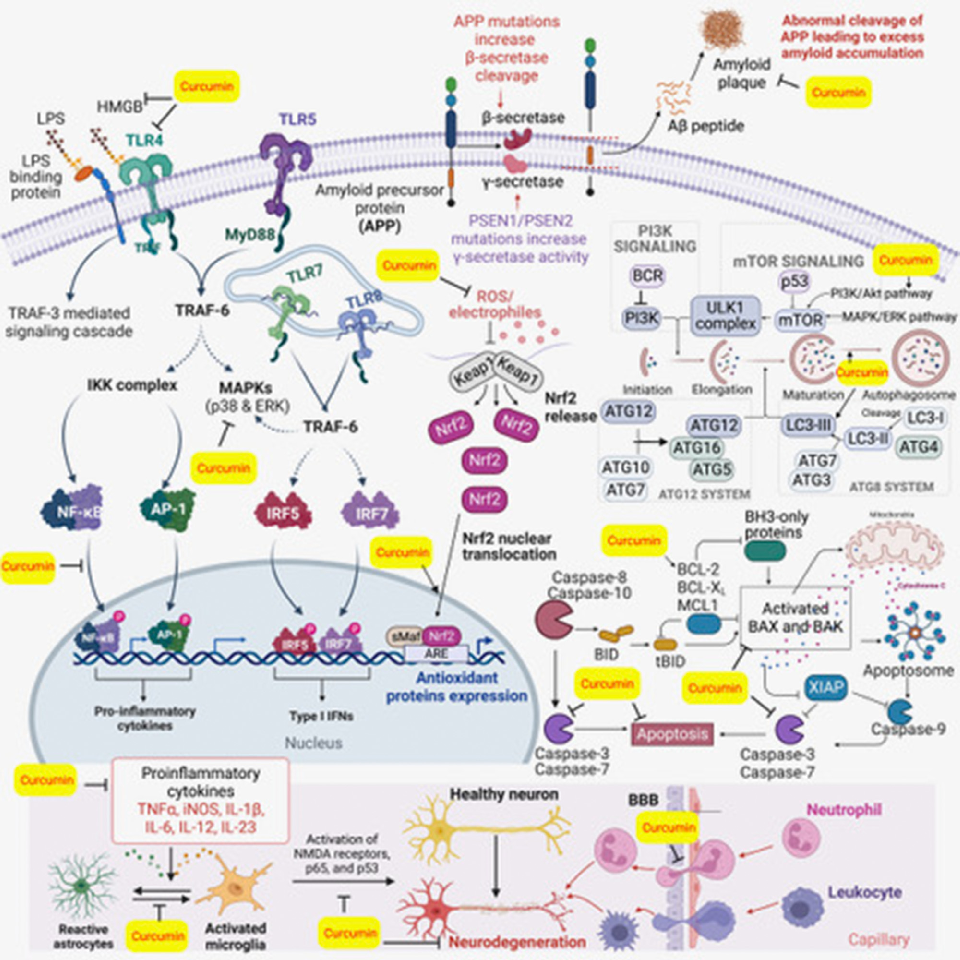
Major inflammatory pathways associated with neurological disorders and curcumin's potential to restore deregulated signaling are depicted. NF-kB, Nrf2, and inflammasome pathways are central to curcumin's neuroprotective mechanism.
More Figures from This Paper
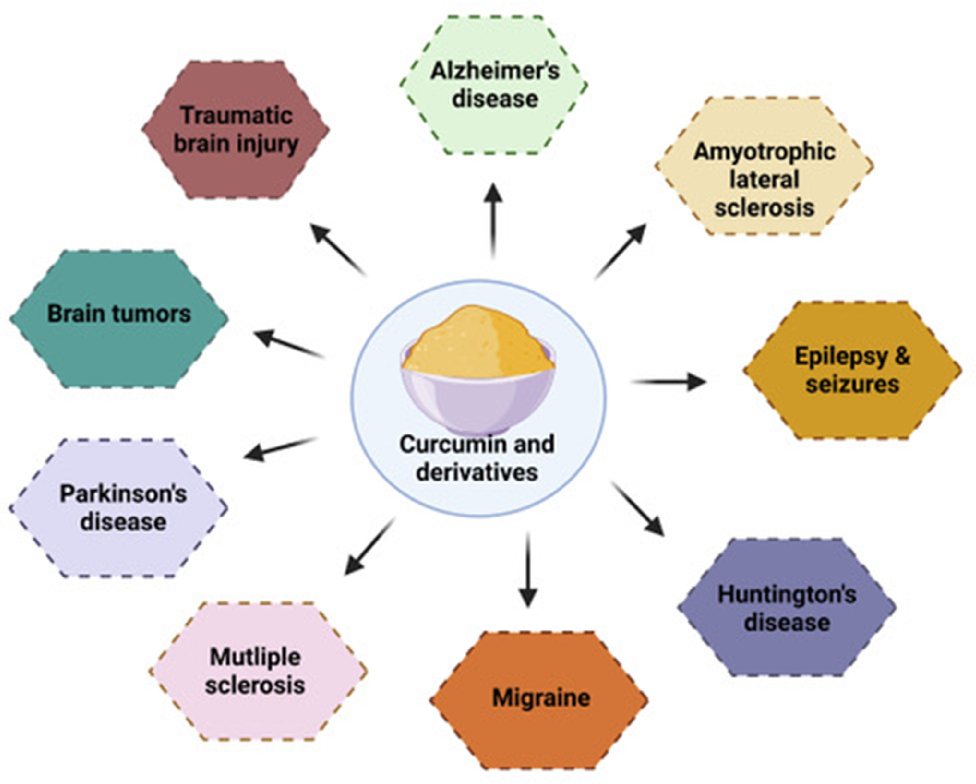
Figure 5
Curcumin activity against various neurodegenerative diseases is illustrated, spanning Alzheimer's disease, Parkinson's disease, Huntington's disease, and amyotrophic lateral sclerosis. Distinct molecular targets are engaged in each condition.
diagram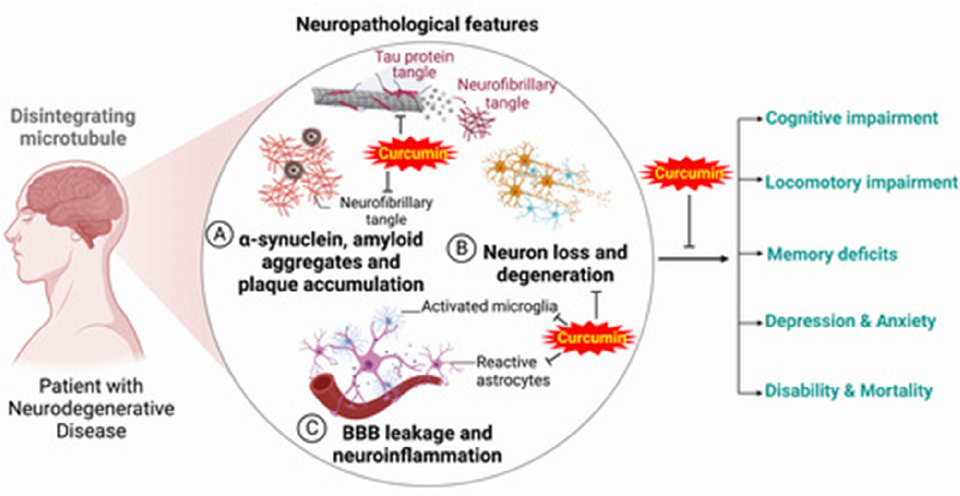
Figure 6
Neuropathological features associated with commonly occurring neurodegenerative diseases and their clinical outcomes are depicted. Protein aggregation, neuroinflammation, and oxidative stress represent shared pathological hallmarks.
diagramFigure 4
Diagram
960 × 960px
· 979,0 Kio
Source Paper
Curcumin, inflammation, and neurological disorders: How are they linked?Cite This Figure
 > Source: Prachi Garodia et al. "Curcumin, inflammation, and neurological disorders: How are they linked?." *Integrative medicine research*, 2023. PMID: [37664456](https://pubmed.ncbi.nlm.nih.gov/37664456/)
<figure>
  <img src="https://pdfs.citedhealth.com/figures/37664456/183.png" alt="Major inflammatory pathways associated with neurological disorders and curcumin's potential to restore deregulated signaling are depicted. NF-kB, Nrf2, and inflammasome pathways are central to curcumin's neuroprotective mechanism." />
  <figcaption>Figure 4. Major inflammatory pathways associated with neurological disorders and curcumin's potential to restore deregulated signaling are depicted. NF-kB, Nrf2, and inflammasome pathways are central to curcumin's neuroprotective mechanism.<br>  Source: Prachi Garodia et al. "Curcumin, inflammation, and neurological disorders: How are they linked?." <em>Integrative medicine research</em>, 2023. PMID: <a href="https://pubmed.ncbi.nlm.nih.gov/37664456/">37664456</a></figcaption>
</figure>