Vitamin B12 الأشكال
5 أشكال من أبحاث محكّمة
Brain imaging studies demonstrate that elevated homocysteine is associated with accelerated rates of brain atrophy, particularly in medial temporal lobe structures critical for memory. B-vitamin treatment appears to slow this atrophy in individuals with elevated baseline homocysteine.
Homocysteine and Dementia: An International Consensus Statement.
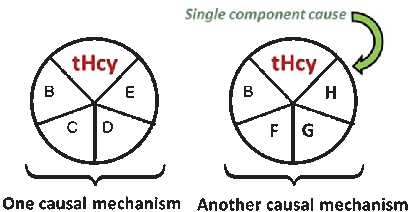
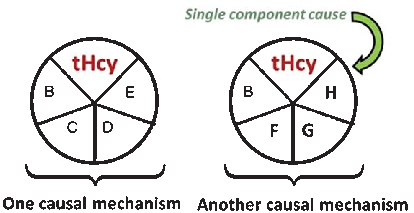
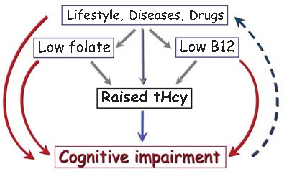
A causal model illustrates how elevated plasma homocysteine may contribute to dementia through multiple pathways, interacting with other risk factors such as age, hypercholesterolemia, and genetic predisposition. No single factor is sufficient alone; rather, combinations of component causes drive disease.
Homocysteine and Dementia: An International Consensus Statement.
Meta-analyses of cohort studies consistently indicate that elevated homocysteine is associated with approximately doubled risk of Alzheimer's disease. The strength of this association persists after adjustment for common confounders including age, sex, and education.
Homocysteine and Dementia: An International Consensus Statement.
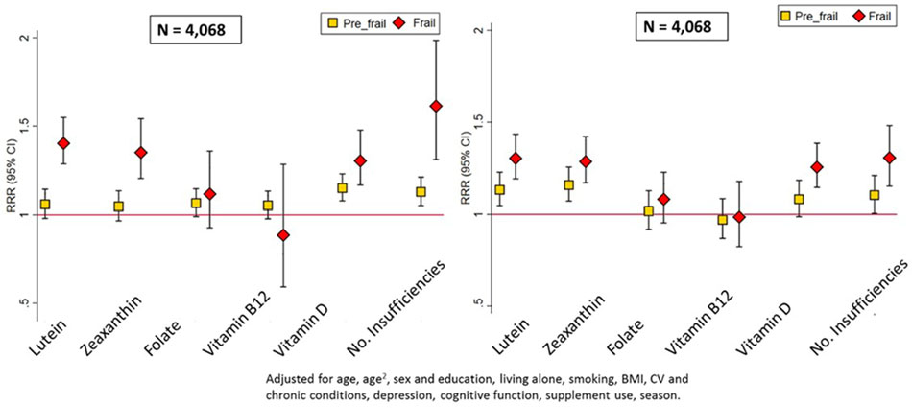
Sustaining an ageing population: the role of micronutrients in frailty and cognitive …
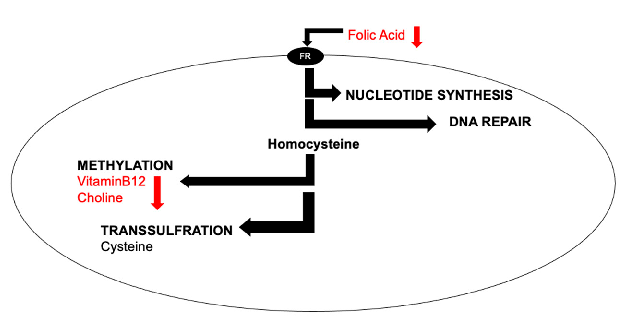
Simplified overview of cellular one-carbon metabolism pathways, illustrating how B-vitamins (folic acid, vitamin B12, choline) participate in nucleotide synthesis, DNA repair, methylation, and transsulfuration reactions relevant to brain health.
The Role of One-Carbon Metabolism in Healthy Brain Aging.