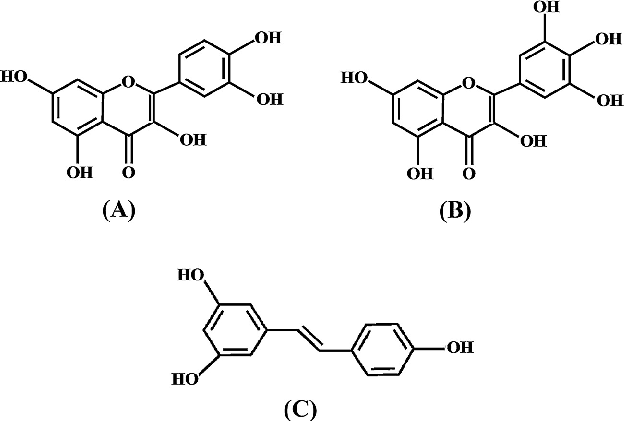
説明
Molecular mechanisms by which red grape polyphenols exert antidiabetic effects are illustrated, including modulation of insulin signaling, glucose uptake, and oxidative stress pathways.
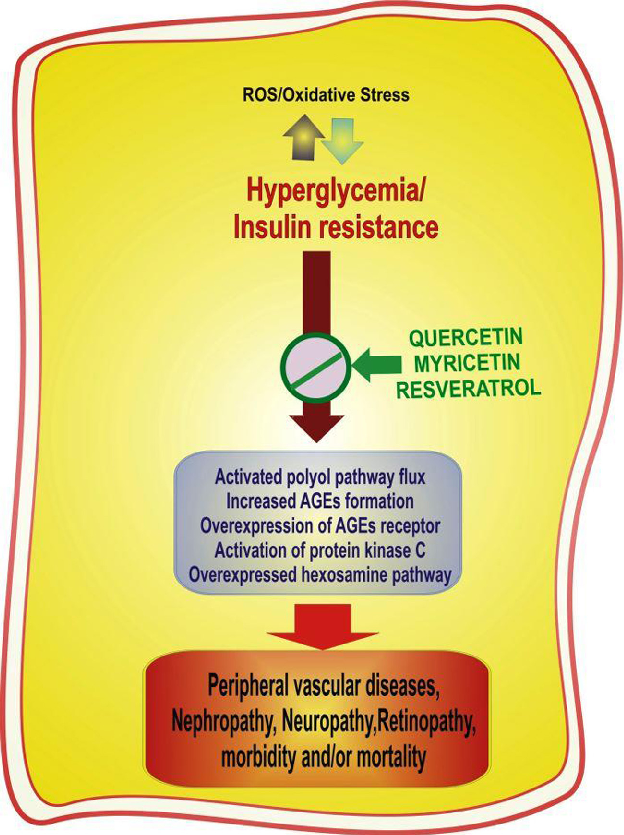
Figure 2
Diagram
624 × 421px
· 36.5 KB
Source Paper
Role of red grape polyphenols as antidiabetic agents.Cite This Figure
 > Source: Kanti Bhooshan Pandey et al. "Role of red grape polyphenols as antidiabetic agents.." *Integrative medicine research*, 2014. PMID: [28664087](https://pubmed.ncbi.nlm.nih.gov/28664087/)
<figure>
  <img src="https://pdfs.citedhealth.com/figures/28664087/84.png" alt="Molecular mechanisms by which red grape polyphenols exert antidiabetic effects are illustrated, including modulation of insulin signaling, glucose uptake, and oxidative stress pathways." />
  <figcaption>Figure 2. Molecular mechanisms by which red grape polyphenols exert antidiabetic effects are illustrated, including modulation of insulin signaling, glucose uptake, and oxidative stress pathways.<br>  Source: Kanti Bhooshan Pandey et al. "Role of red grape polyphenols as antidiabetic agents.." <em>Integrative medicine research</em>, 2014. PMID: <a href="https://pubmed.ncbi.nlm.nih.gov/28664087/">28664087</a></figcaption>
</figure>