BrainCited
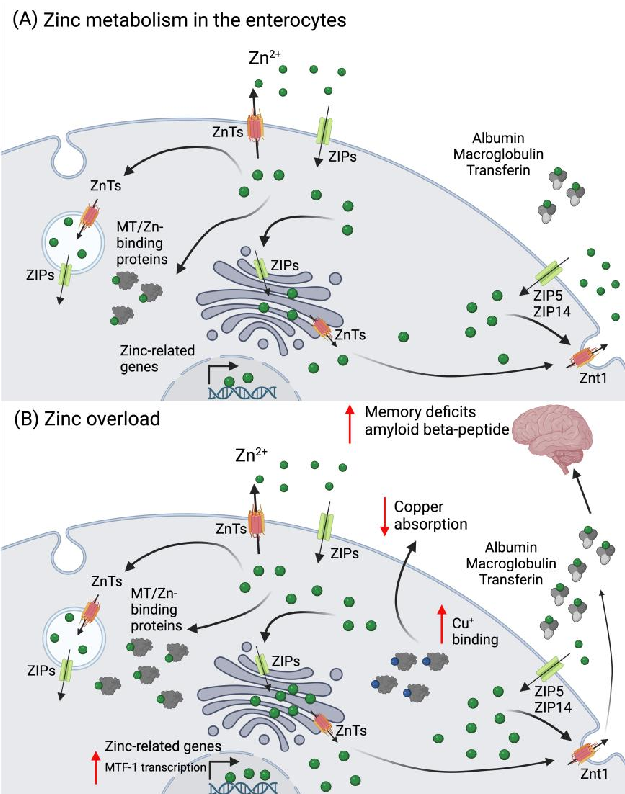
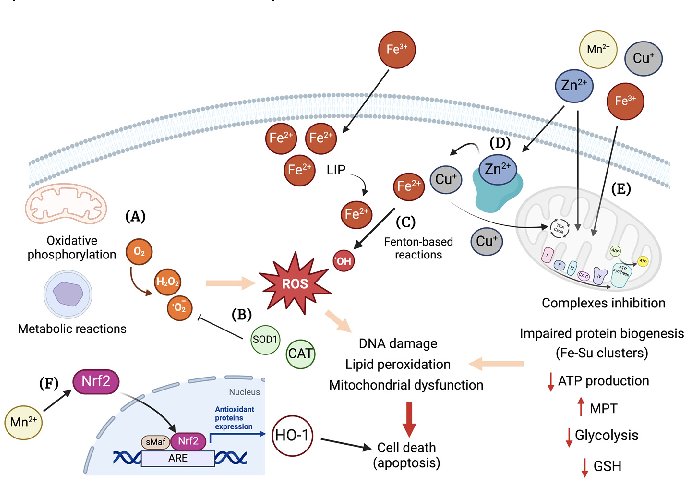
Figure 2. Zinc metabolism in the enterocyte and its overload. (A) Zinc is absorbed as Zn2+ via the ZIPs (mainly ZIP4) and can be excreted into the intestinal lumen by the ZnTs. In the enterocytes, Zn2+ can be found as cytoplasmic free zinc (which can bind
Figure 3. Figure 2. Zinc metabolism in the enterocyte and its overload. (A) Zinc is absorbed as Zn2+ via the ZIPs (mainly ZIP4) and can be excreted into the intestinal lumen by the ZnTs. In the enterocytes, Zn2+ can be found as cytoplasmic free zinc (which can bind to low molecular weight ligants), sequestered into vesicles, or bound to Zn-binding proteins, such as MT. Zinc can also be transported to the Golgi apparatus or to the nuclei, where it induces the expression of several zinc-related genes. In circulation, Zn2+ binds to albumin, macroglobulin, or transferrin. (B) In a scenario of zinc overload, there is an increase in the transcription of MTF-1, which leads to an increased MT expression to buffer the cytosolic Zn2+. The overexpression of MT leads to Cu+ binding and decreased absorption. The increase in zinc in circulation can be detrimental for brain function, leading to the development of memory deficits and increased deposition of the amyloid beta peptide, which is linked to different neurodegenerative conditions. Abbreviations: MT: metallothioneins; MTF-1: metal regulatory transcription factor 1; ZIP: Zrt-, Irt-like protein family; Zn: zinc; ZnT: zinc transporter. Created in BioRender.com.

Figure 3

625 × 794px · 357,3 KB

Source Paper

Metabolic Derangement of Essential Transition Metals and Potential Antioxidant Therapies.

International journal of molecular sciences (2024)

PMID: 39063122

DOI: 10.3390/ijms25147880

Cite This Figure

![Figure 3: Figure 2. Zinc metabolism in the enterocyte and its overload. (A) Zinc is absorbed as Zn2+ via the ZIPs (mainly ZIP4) and can be excreted into the intestinal lumen by the ZnTs. In the enterocytes, Zn2+ can be found as cytoplasmic free zinc (which can bind](https://pdfs.citedhealth.com/figures/39063122/117.png)

> Source: Adriana Fontes et al. "Metabolic Derangement of Essential Transition Metals and Potential Antioxidant T." *International journal of molecular sciences*, 2024. PMID: [39063122](https://pubmed.ncbi.nlm.nih.gov/39063122/)
<figure>
  <img src="https://pdfs.citedhealth.com/figures/39063122/117.png" alt="Figure 2. Zinc metabolism in the enterocyte and its overload. (A) Zinc is absorbed as Zn2+ via the ZIPs (mainly ZIP4) and can be excreted into the intestinal lumen by the ZnTs. In the enterocytes, Zn2+ can be found as cytoplasmic free zinc (which can bind" />
  <figcaption>Figure 3. Figure 2. Zinc metabolism in the enterocyte and its overload. (A) Zinc is absorbed as Zn2+ via the ZIPs (mainly ZIP4) and can be excreted into the intestinal lumen by the ZnTs. In the enterocytes, Zn2+ can be found as cytoplasmic free zinc (which can bind<br>  Source: Adriana Fontes et al. "Metabolic Derangement of Essential Transition Metals and Potential Antioxidant T." <em>International journal of molecular sciences</em>, 2024. PMID: <a href="https://pubmed.ncbi.nlm.nih.gov/39063122/">39063122</a></figcaption>
</figure>
