Zinc Hình ảnh
11 hình ảnh từ nghiên cứu có bình duyệt
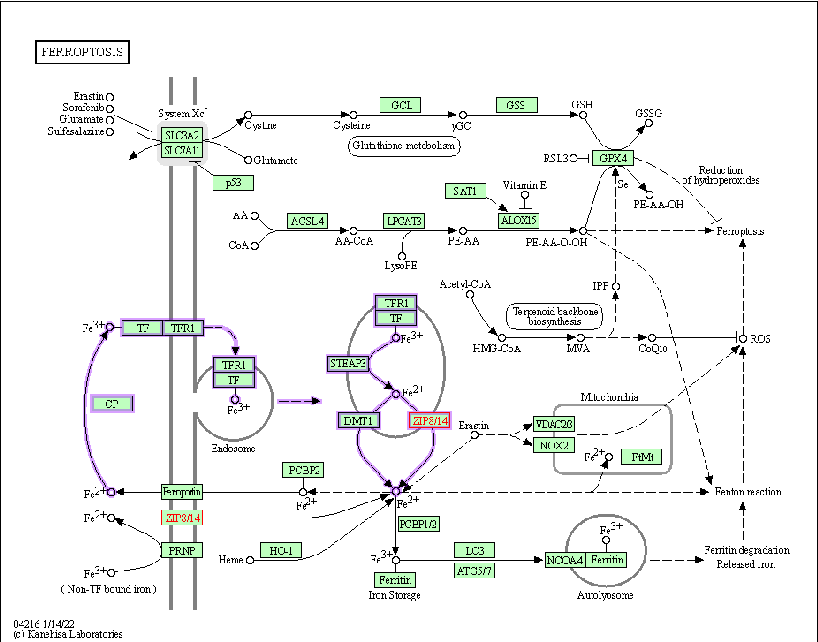
Supplementary or concluding data on manganese homeostasis consequences are presented. The review emphasizes that maintaining manganese within a narrow physiological range is critical for preventing both deficiency-related enzyme dysfunction and toxicity-related neurodegeneration.
Consequences of Disturbing Manganese Homeostasis.
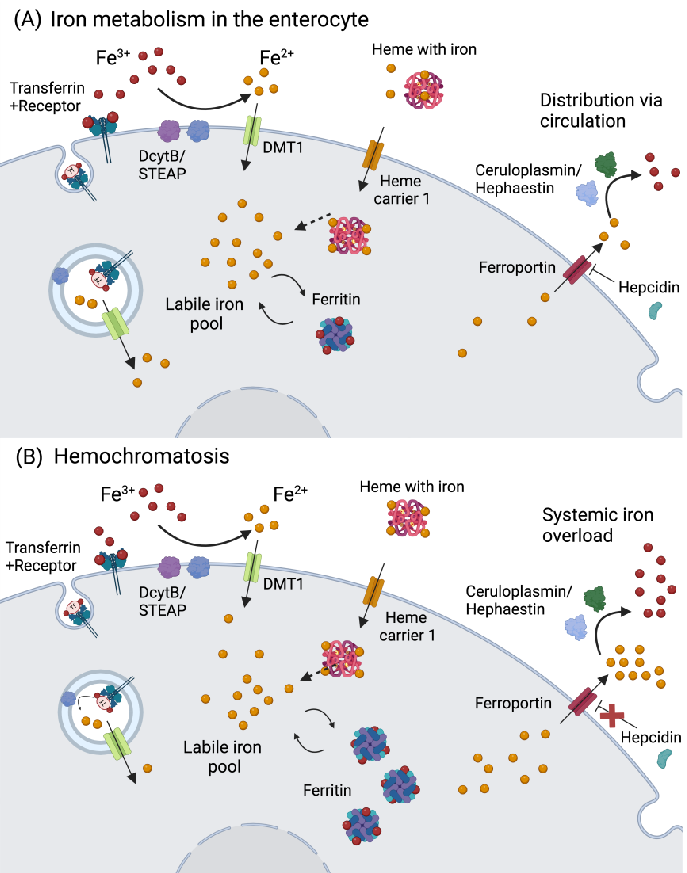
Figure 1. Iron metabolism in the enterocyte and hemochromatosis. (A) Iron is absorbed as Fe2+ through reduction by DcytB/STEAP, and transported via DMT1. In the case iron is bound to …
Metabolic Derangement of Essential Transition Metals and Potential Antioxidant Therapies.
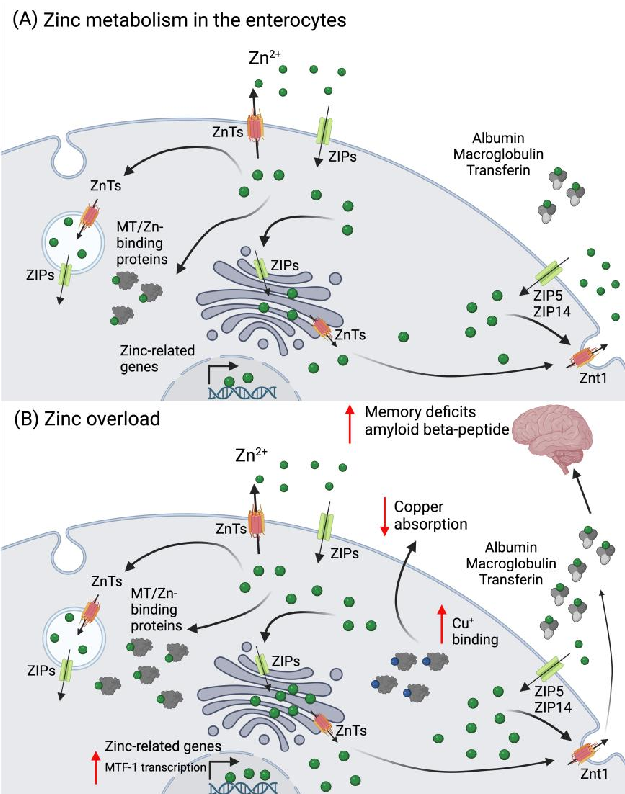
Figure 2. Zinc metabolism in the enterocyte and its overload. (A) Zinc is absorbed as Zn2+ via the ZIPs (mainly ZIP4) and can be excreted into the intestinal lumen by …
Metabolic Derangement of Essential Transition Metals and Potential Antioxidant Therapies.
Metabolic Derangement of Essential Transition Metals and Potential Antioxidant Therapies.
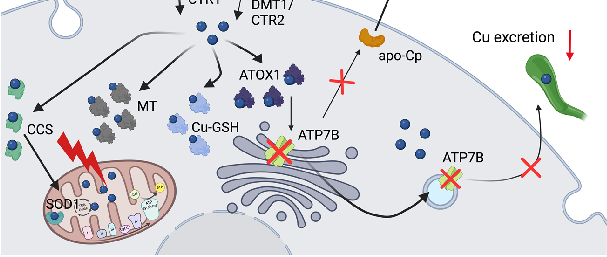
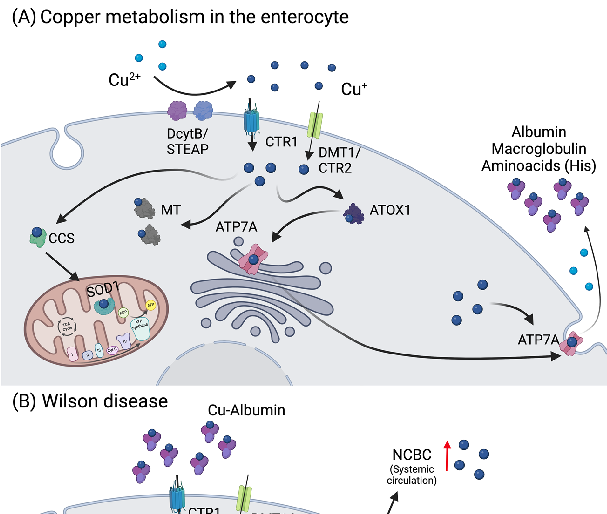
Figure 3. Copper metabolism in the enterocytes and Wilson disease. (A) Copper is reduced to Cu+ by STEAP or DcytB, and transported mainly via CTR1, but also by DMT1/CTR2. Thereupon,
Metabolic Derangement of Essential Transition Metals and Potential Antioxidant Therapies.
Metabolic Derangement of Essential Transition Metals and Potential Antioxidant Therapies.
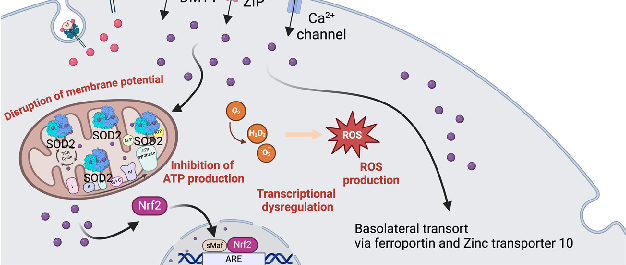
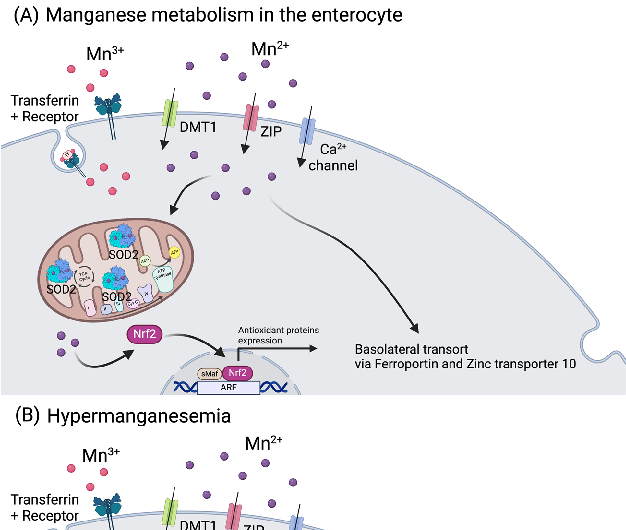
Figure 4. Manganese metabolism and hypermanganesemia. (A) Manganese can be taken up as Mn2+ via DMT1, ZIP, or Ca2+ channels, or as Mn3+ by binding to transferrin. In mitochondria, Mn2+ …
Metabolic Derangement of Essential Transition Metals and Potential Antioxidant Therapies.
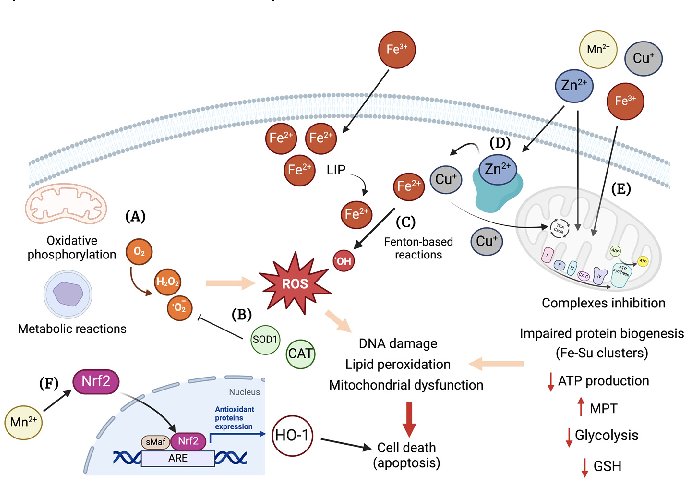
Figure 5. Overview of cellular mechanisms related to toxicity by essential transition metals. (A) Different metabolic pathways in the cell use O2, e.g., oxidative phosphorylation in the mitochondria. The generation …
Metabolic Derangement of Essential Transition Metals and Potential Antioxidant Therapies.
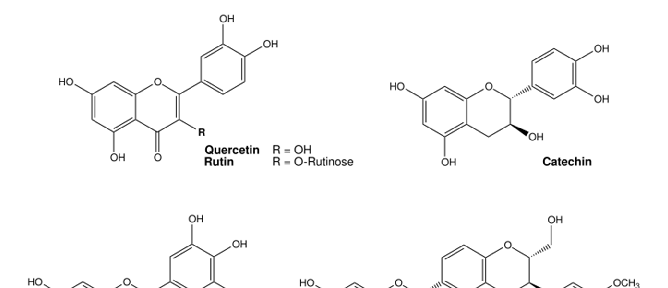
Metabolic Derangement of Essential Transition Metals and Potential Antioxidant Therapies.
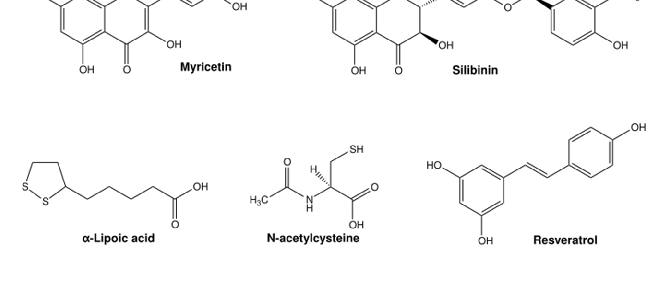
Metabolic Derangement of Essential Transition Metals and Potential Antioxidant Therapies.
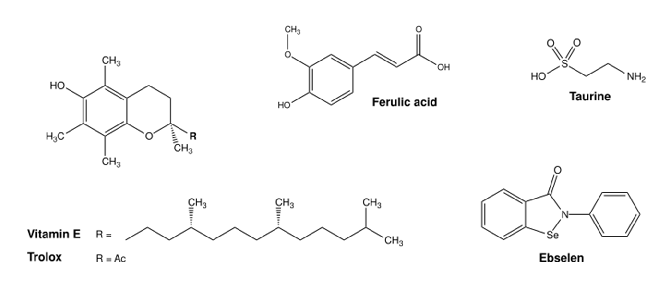
Metabolic Derangement of Essential Transition Metals and Potential Antioxidant Therapies.