Description
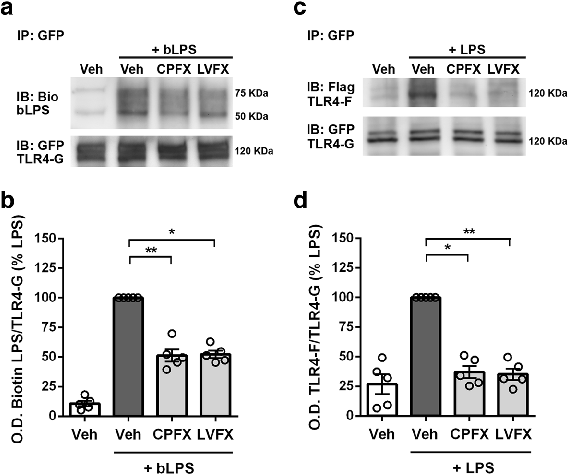
LPS binding and TLR4 dimerization assays in Ba/F3 cells demonstrate that fluoroquinolones interfere with the initial receptor activation step of innate immune signaling.
More Figures from This Paper
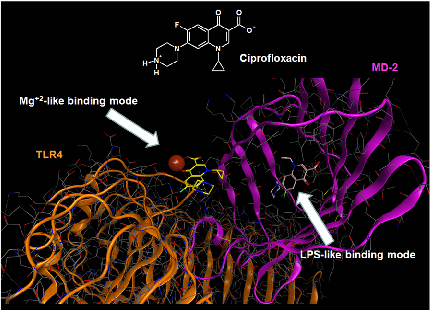
Figure 4
Molecular docking analysis reveals two alternative binding conformations of ciprofloxacin within the TLR4-MD-2 complex binding pocket, suggesting direct physical interaction with the innate immune receptor.
diagram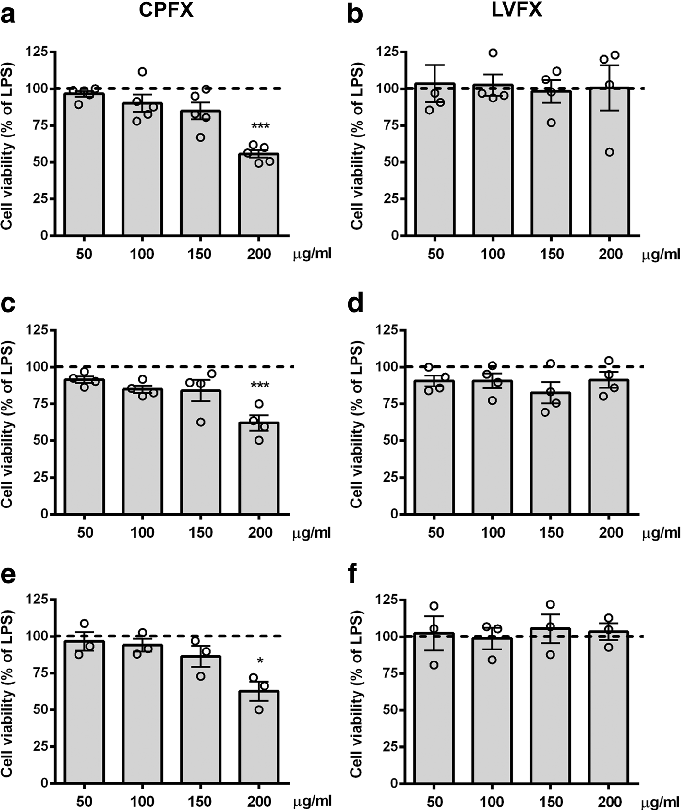
Figure 5
Cell viability assays demonstrate that ciprofloxacin and levofloxacin at the tested concentrations do not significantly reduce microglial survival, confirming that anti-inflammatory effects are not due to cytotoxicity.
chart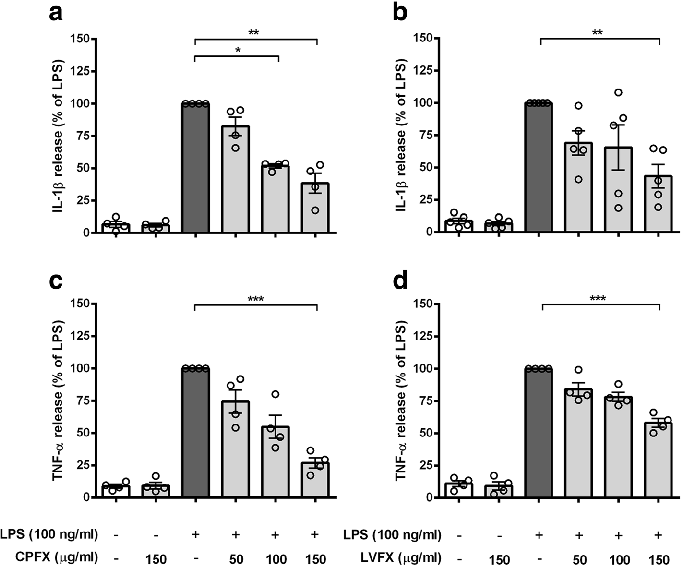
Figure 6
Cytokine release profiles from LPS-stimulated cortical microglia reveal dose-dependent reductions in TNF-alpha and IL-6 following fluoroquinolone treatment.
chart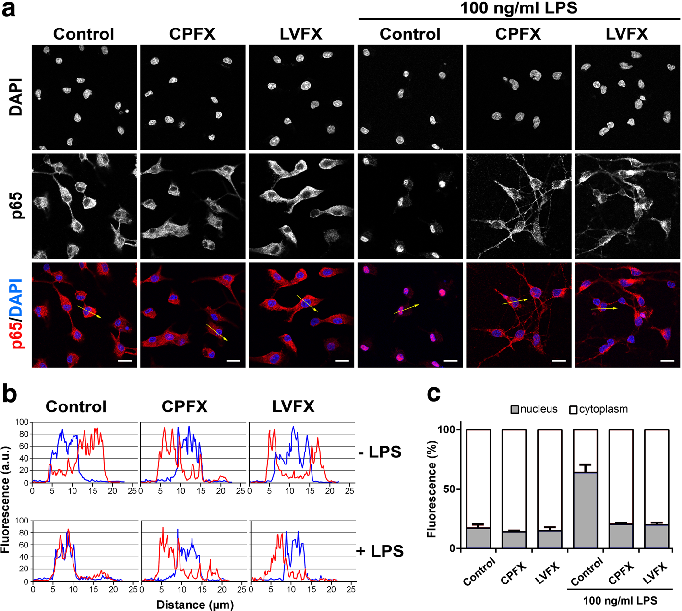
Figure 7
NF-kB nuclear translocation in LPS-stimulated microglia is attenuated by both ciprofloxacin and levofloxacin, as shown by immunofluorescence or reporter gene assays.
chart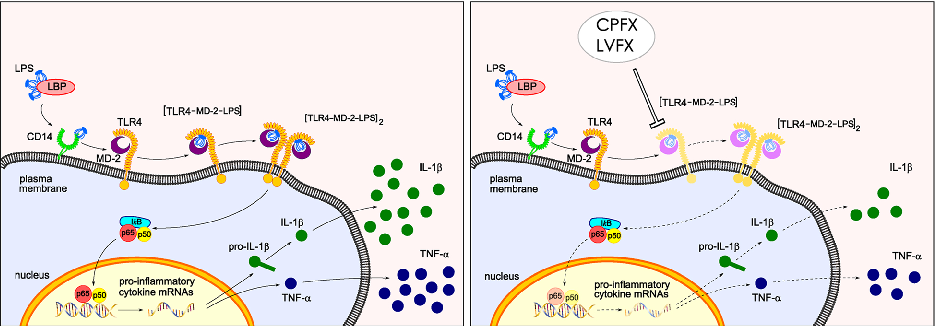
Figure 9
Proposed mechanistic model depicts how ciprofloxacin and levofloxacin target the TLR4-MD-2 complex to block LPS-induced downstream signaling cascades and cytokine production.
diagramFigure 8
ChartSource Paper
Ciprofloxacin and levofloxacin attenuate microglia inflammatory response via TLR4/NF-kB pathway.Cite This Figure
 > Source: Morena Zusso et al. "Ciprofloxacin and levofloxacin attenuate microglia inflammatory response via TLR." *Journal of neuroinflammation*, 2019. PMID: [31319868](https://pubmed.ncbi.nlm.nih.gov/31319868/)
<figure>
  <img src="https://pdfs.citedhealth.com/figures/31319868/112.png" alt="LPS binding and TLR4 dimerization assays in Ba/F3 cells demonstrate that fluoroquinolones interfere with the initial receptor activation step of innate immune signaling." />
  <figcaption>Figure 8. LPS binding and TLR4 dimerization assays in Ba/F3 cells demonstrate that fluoroquinolones interfere with the initial receptor activation step of innate immune signaling.<br>  Source: Morena Zusso et al. "Ciprofloxacin and levofloxacin attenuate microglia inflammatory response via TLR." <em>Journal of neuroinflammation</em>, 2019. PMID: <a href="https://pubmed.ncbi.nlm.nih.gov/31319868/">31319868</a></figcaption>
</figure>