Description
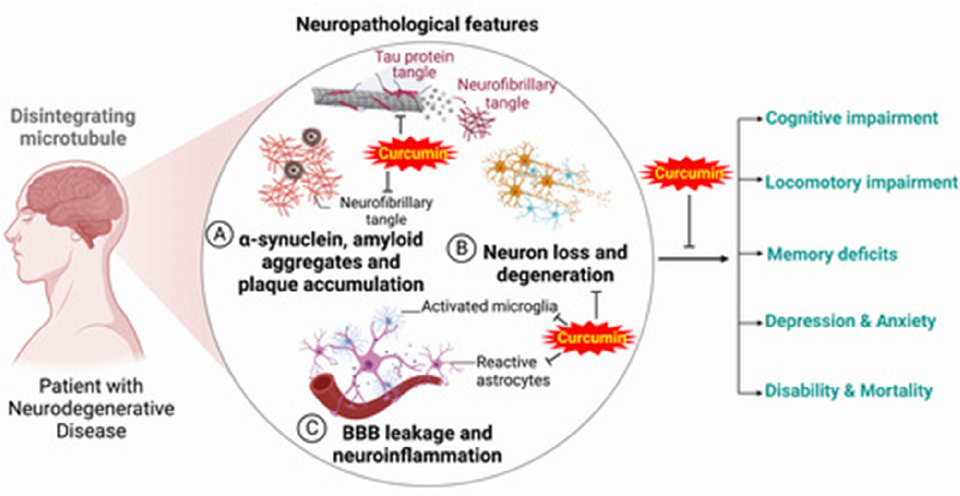
Neuropathological features associated with commonly occurring neurodegenerative diseases and their clinical outcomes are depicted. Protein aggregation, neuroinflammation, and oxidative stress represent shared pathological hallmarks.
More Figures from This Paper
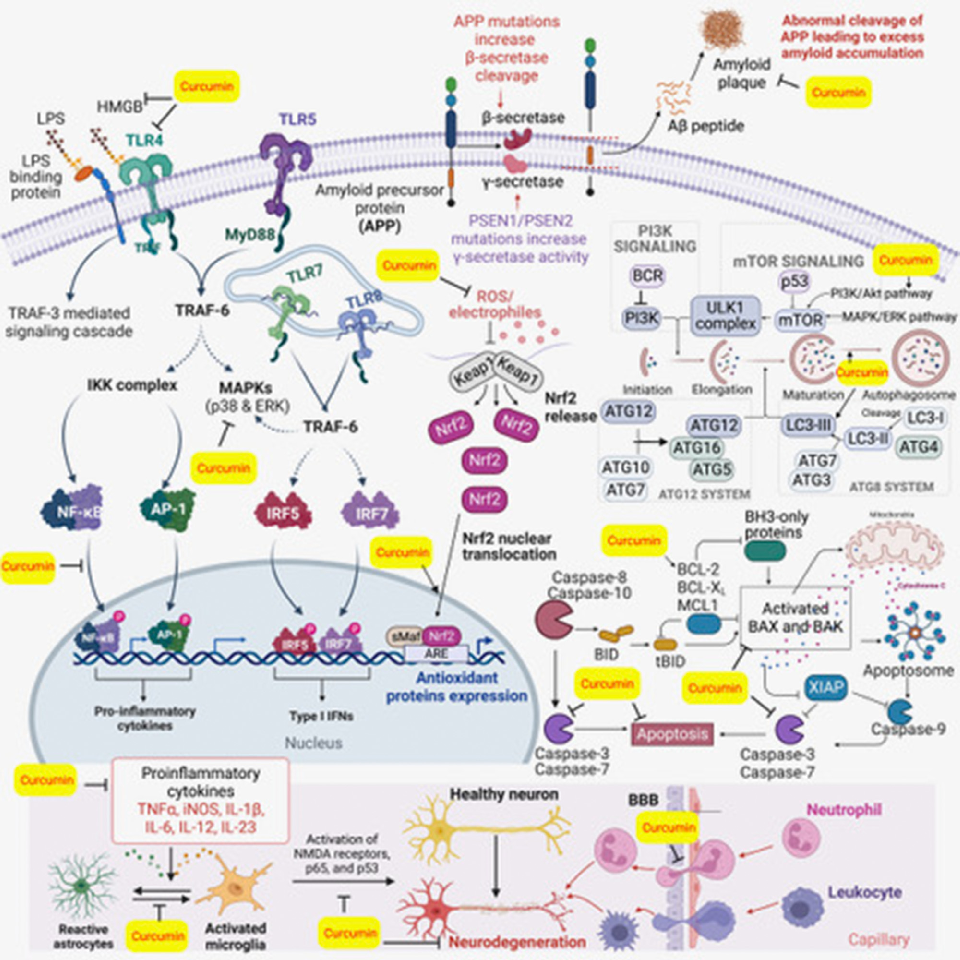
Figure 4
Major inflammatory pathways associated with neurological disorders and curcumin's potential to restore deregulated signaling are depicted. NF-kB, Nrf2, and inflammasome pathways are central to curcumin's neuroprotective mechanism.
diagram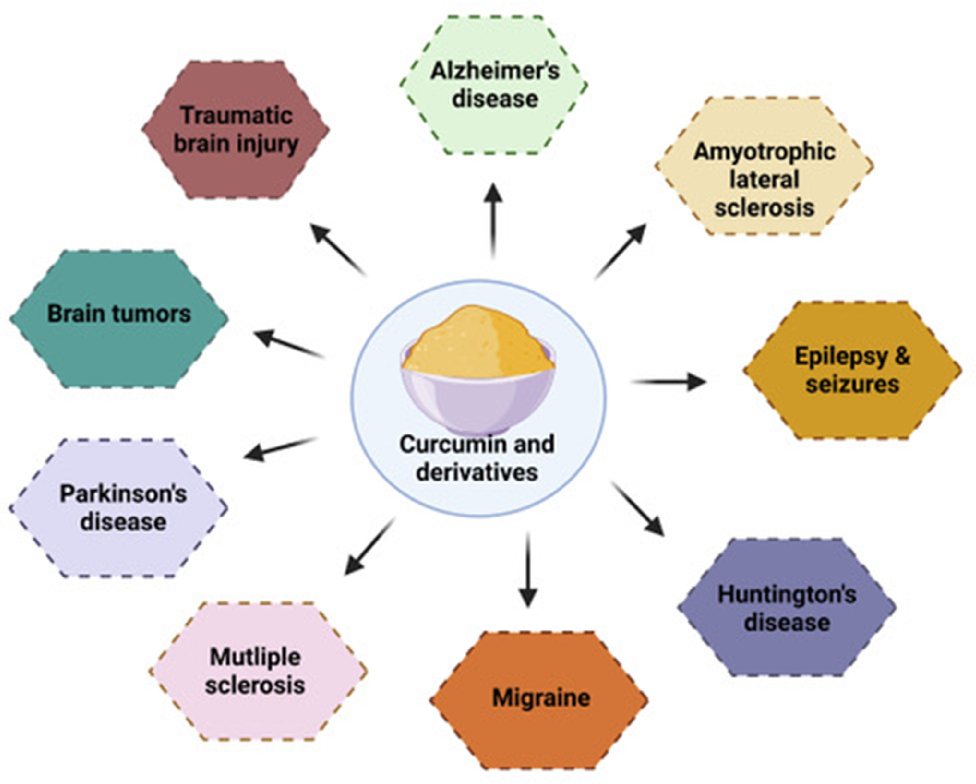
Figure 5
Curcumin activity against various neurodegenerative diseases is illustrated, spanning Alzheimer's disease, Parkinson's disease, Huntington's disease, and amyotrophic lateral sclerosis. Distinct molecular targets are engaged in each condition.
diagramFigure 6
Diagram
960 × 496px
· 349.7 KB
Source Paper
Curcumin, inflammation, and neurological disorders: How are they linked?Cite This Figure
 > Source: Prachi Garodia et al. "Curcumin, inflammation, and neurological disorders: How are they linked?." *Integrative medicine research*, 2023. PMID: [37664456](https://pubmed.ncbi.nlm.nih.gov/37664456/)
<figure>
  <img src="https://pdfs.citedhealth.com/figures/37664456/649.png" alt="Neuropathological features associated with commonly occurring neurodegenerative diseases and their clinical outcomes are depicted. Protein aggregation, neuroinflammation, and oxidative stress represent shared pathological hallmarks." />
  <figcaption>Figure 6. Neuropathological features associated with commonly occurring neurodegenerative diseases and their clinical outcomes are depicted. Protein aggregation, neuroinflammation, and oxidative stress represent shared pathological hallmarks.<br>  Source: Prachi Garodia et al. "Curcumin, inflammation, and neurological disorders: How are they linked?." <em>Integrative medicine research</em>, 2023. PMID: <a href="https://pubmed.ncbi.nlm.nih.gov/37664456/">37664456</a></figcaption>
</figure>