BrainCited

Vitamin B12 Figures

2 figures from peer-reviewed research
All Alpha-Lipoic Acid Bacopa monnieri Citicoline Creatine Curcumin Folate Ginkgo biloba Green Tea Extract (EGCG) L-Theanine Lutein & Zeaxanthin Melatonin Omega-3 Fatty Acids (DHA/EPA) Panax Ginseng Phosphatidylserine Resveratrol Rhodiola rosea Taurine Uridine Monophosphate Vitamin B12 Vitamin D Vitamin E Zinc
All Types Chart Diagram Photograph Flowchart Forest Plot Micrograph Other
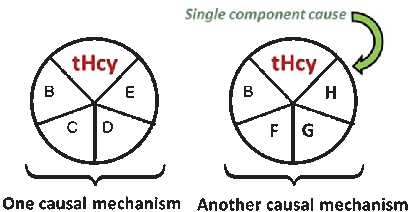
Fig. 1. Hypothetical ‘sufficient causes’ for dementia that involve raised plasma total homocysteine (tHcy) as one of the single component causes. For example, B might be age, C hypercholesterolemia, D hypertension, E smoking, F ApoE4, G low physicalactivit
Figure 4 Diagram

A causal model illustrates how elevated plasma homocysteine may contribute to dementia through multiple pathways, interacting with other risk factors such as age, hypercholesterolemia, and genetic predisposition. No single factor is sufficient alone; rather, combinations of component causes drive disease.

Homocysteine and Dementia: An International Consensus Statement.
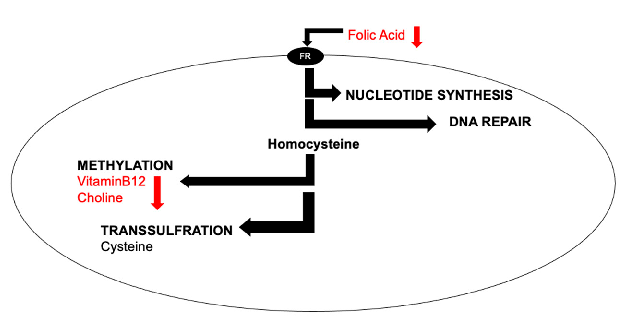
Figure 1. Simplified cellular one-carbon (1C) metabolism. B-vitamins are pleiotropic molecules, as they are involved in nucleotide synthesis, DNA repair, methylation, and transsulfuration. In this review, we focus on the impact of increasing dietary levels
Figure 6 Diagram

Simplified overview of cellular one-carbon metabolism pathways, illustrating how B-vitamins (folic acid, vitamin B12, choline) participate in nucleotide synthesis, DNA repair, methylation, and transsulfuration reactions relevant to brain health.

The Role of One-Carbon Metabolism in Healthy Brain Aging.